


Property Restoration
What to expect from City Utilities after water / sewer / stormwater work has been completed on your property
Installing new or repairing existing water, sewer, or storm lines can impact your property. These lines are buried in the ground, and in order to install or repair them, City Utilities will need to dig in the ground to complete the work. Sometimes, these lines are located on your property, and City Utilities may need to dig on your property to continue to provide safe, reliable service at your home or business.
As part of these projects, City Utilities is responsible to repair or replace the areas impacted by our work, including portions of the street, sidewalk, driveway, or yard. Final restoration takes time, but City Utilities is committed to restoring these impacted areas after our work is completed.
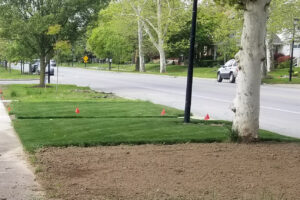
Restoration Work
During and following construction, City Utilities may place temporary or permanent restoration measures.
City Utilities works to ensure work zones are safe and accessible until permanent restoration can occur. Depending on the time of year work occurs, permanent restoration may have to wait for weather to clear.
Temporary Patching
When permanent pavement restoration will not occur immediately following construction, City Utilities or its contractors may place a temporary pavement patch on the street or sidewalk.
Permanent Pavement or Concrete Restoration
Once construction is complete, City Utilities will begin final restoration of your street, sidewalk, or driveway. We work to ensure that these surfaces are restored with similar material. Concrete streets will be replaced with concrete, and asphalt streets will be replaced with asphalt. This work may take several weeks to complete are construction is finished, but City Utilities is committed to completing final restoration.
Grass Restoration Overview
Once construction is complete, and as weather permits, City Utilities will work to restore your lawn. This work may include:
- Filling in areas where settling has occurred
- Final grading and leveling the area
- Adding topsoil to the area
- Reseeding the lawn area
Types of Grass Restoration
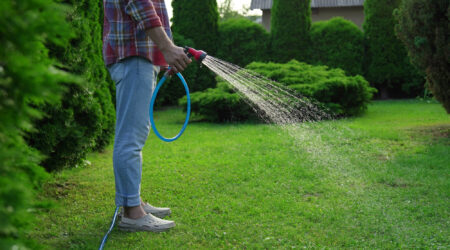
Straw & Seed
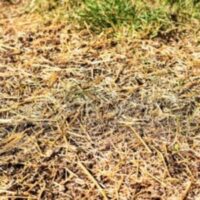
Matting & Seed
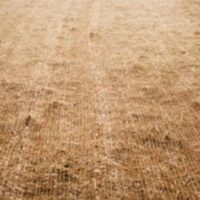
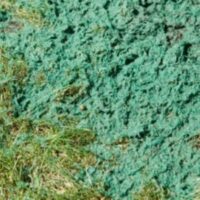
HyrdoSeeding
Grass Care Frequently Asked Questions
When can I mow the new grass?
Once newly emerging blades reach a height greater than 3 inches, they can be cut to a height of 2 inches. After the first 3 to 4 mows, adjust your mower to a permanent mowing height between 2.5-4 inches.
Do I need to water my grass?
City Utilities will plant seed as part of our restoration work, but for best results, you should water the area. A newly seeded lawn will need to be irrigated lightly 1-2 times daily after soil temperatures reach 55 degrees Fahrenheit. Once seedlings are 2 inches high, gradually reduce the frequency of watering and water more deeply. After the grass has been mowed (once established grass reaches more than 3 inches in height) 2 or 3 times, deep, infrequent irrigation is most effective.
When is the best time to water the seeds?
The ideal time for irrigation is 4:00 AM to 9:00 AM; this reduces disease, sun scaling, and evaporation.
How much water is needed for the seeds?
Apply enough water to keep the top 0.5 to 1 inches of soil moist. Light, frequent irrigation is recommended during the first few weeks.
Detailed Grass Care Guidance
Watering
Watering is essential to establishing your lawn. The seeds must be kept damp until their roots establish in order to germinate and grow. During warmer months, it is recommended that watering is done during cooler periods of the day so that all the water is absorbed by the plants. Watering is also dependent on the weather, as precipitation can count in your watering schedule. Take care not to flood the establishing lawn, as excessive watering or puddling of the seedbed will create poor root development and cause erosion issues. The seeds should be watered lightly 1-2 times daily until they sprout.
Once seedlings have sprouted, watering can be reduced to 2-3 times per week until the first mow. From this point on, your lawn should be watered deeply weekly, making sure to provide about 1 inch of water to the area. Irrigation can be applied using a variety of methods, such as a hose, a sprinkler, a gardening can, or an irrigation system. A light irrigation can be achieved by watering constantly for 5-10 minutes, and a deep irrigation can be achieved by watering constantly for 20-30 minutes.
Mowing
To encourage newly established turf to fill in quickly, mowing is recommended once the grass reaches a certain height. Never remove more than 1/3 of the grass blade during a single mowing. Adjustments to mower blades should be considered based on the height of the lawn. Mower blades should be kept sharp to ensure a clean, proper cut. Dull blades can tear young grass, which damages the lawn tips and heightens the risk of turf diseases.
Foot Traffic
Growing grass is very delicate, making it important to keep foot traffic from pets and people off of your establishing lawn. Foot traffic can disrupt the germination process and displace seeds, which can cause uneven growth and bare areas. Temporary barriers, steppingstones, or planned walkways can be used to avoid disturbances to your new lawn. After 2-3 mows it is safe to resume regular usage of your lawn.
Fertilizer
New grass has poorly developed root systems and cannot effectively absorb nutrients from the soil. Applying fertilizer, such as a 19-19-19, is recommended to encourage growth and establishment of grass. Malnourished grass can be prone to disease and insects. Homeowners should read and follow all labels when using fertilizers. Avoid applying fertilizers before and during periods of wet weather, as rain could cause fertilizer to run off your lawn and into the environment.
Do not apply any herbicides or pesticides to newly planted areas until the new seedlings have been mowed al least 4 times. Applying herbicides will damage the newly plan1ed grass, which can cause establishment and erosion issues. Weed and feed products should be avoided, as their high herbicide content can hinder the growth of the grass seed.
For more information regarding fertilizer visit the Purdue Extension.
Overseeding
Overseeding can increase the density of the lawn or newly established turf area. In order to establish successful germination, there must be seed-soil contact and water. It is recommended that Homeowners patch weak/bare spots in their lawn. A starter fertilizer can be applied to assist seed germination and development. Purdue University recommends a high in phosphorous fertilizer. Applications should be applied according to the label.
Frequently Asked Questions
Why is City Utilities digging in on my property or the street in front of my property?
City Utilities has buried water, sewer, and storm lines throughout the City of Fort Wayne and beyond city limits. Installing new or repairing existing water, sewer, or storm lines can impact your property. These lines are buried in the ground, and in order to install or repair them, City Utilities will need to dig in the ground to complete the work. Sometimes, these lines are located on your property, and City Utilities may need to dig on your property to continue to provide safe, reliable service at your home or business. This work will involve construction equipment like trucks, trailers, backhoes, excavators, directional boring machines, and other equipment. City Utilities takes every effort to try to minimize impacts from digging.
How long will restoration take to complete?
City Utilities understands that construction and restoration take time and are impactful to property owners. Several things impact how long restoration takes. Weather and the time of year can be a challenge. City Utilities may not be able to fully restore your property during colder months due to freezing temperatures, frozen ground, and freezing precipitation. Materials list asphalt or concrete may not be available during colder weather, and grass seed will not grow in colder weather.
City Utilities is committed to restoring your property, and while restoration may be delayed, please know that your property restoration is a priority.
How will my property be restored?
Before work begins, City Utilities or our contractors will document your property condition and that of the adjacent roadway to ensure we restore the area appropriately in order to restore your property as closely to its original condition as possible.
Who is responsible for restoring my property?
City Utilities will restore your yard, sidewalk, and driveway if we disturb them as part of our construction activities. Temporary restoration will occur at the time of construction.
Who is responsible for repairing my private utilities like sprinklers, electric dog fence, or sump pump discharge lines?
As the property owner, you are responsible to mark your private underground utilities. City Utilities will not repair these items if they are not located prior to construction starting. The property owner is responsible for repairing private utilities. As the property owner, you are responsible for any items you place in easements or the City Right-of-Way. City Utilities will not repair or replace these items. The property owner is responsible for removal or repair of these items.
How can I identify the markings on my property?
Flags and / or paint markings will be placed on your property prior to the start of City Utilities construction projects. If you are not expecting to see these markings, you can call 811 to find out who requested the markings.
How long do the markings and flags need to stay on my property? I want to mow my lawn.
Markings should remain until the restoration work is complete. If you remove or destroy the markings, or they are no longer visible, a new 811 request will be required to be submitted and could cause the completion of the work to be delayed.
Who do I contact if I have more questions?
Please contact 311 with questions.